
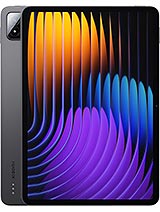
Is the Xiaomi Pad 7 good for gaming?
Gaming score
Excellent for gaming
Compatibility by game
Individual analysis of the main mobile games — the level shows which settings the device can run.
Free Fire
Runs competitiveFree Fire runs in a competitive setup (1,600,000 AnTuTu points, 144Hz screen) — suitable for esports.
- 12 GB of RAM — well above the 2 GB minimum for Free Fire.
- AnTuTu 1,600,000 ≥ 500,000 (threshold for competitive).
- The 144Hz screen meets the competitive minimum of 90Hz.
Subway Surfers
Runs competitiveSubway Surfers runs in a competitive setup (1,600,000 AnTuTu points, 144Hz screen) — suitable for esports.
- 12 GB of RAM — well above the 0.768 GB minimum for Subway Surfers.
- AnTuTu 1,600,000 ≥ 300,000 (threshold for competitive).
Brawl Stars
Runs competitiveBrawl Stars runs in a competitive setup (1,600,000 AnTuTu points, 144Hz screen) — suitable for esports.
- 12 GB of RAM — well above the 2 GB minimum for Brawl Stars.
- AnTuTu 1,600,000 ≥ 500,000 (threshold for competitive).
- The 144Hz screen meets the competitive minimum of 60Hz.
Roblox
Runs competitiveRoblox runs in a competitive setup (1,600,000 AnTuTu points, 144Hz screen) — suitable for esports.
- 12 GB of RAM — well above the 1 GB minimum for Roblox.
- AnTuTu 1,600,000 ≥ 850,000 (threshold for competitive).
EA Sports FC Mobile
Runs competitiveEA Sports FC Mobile runs in a competitive setup (1,600,000 AnTuTu points, 144Hz screen) — suitable for esports.
- 12 GB of RAM — well above the 1 GB minimum for EA Sports FC Mobile.
- AnTuTu 1,600,000 ≥ 900,000 (threshold for competitive).
- The 144Hz screen meets the competitive minimum of 60Hz.
Call of Duty Mobile
Runs competitiveCall of Duty Mobile runs in a competitive setup (1,600,000 AnTuTu points, 144Hz screen) — suitable for esports.
- 12 GB of RAM — well above the 2 GB minimum for Call of Duty Mobile.
- AnTuTu 1,600,000 ≥ 1,000,000 (threshold for competitive).
- The 144Hz screen meets the competitive minimum of 90Hz.
PUBG Mobile
Runs competitivePUBG Mobile runs in a competitive setup (1,600,000 AnTuTu points, 144Hz screen) — suitable for esports.
- 12 GB of RAM — well above the 2 GB minimum for PUBG Mobile.
- AnTuTu 1,600,000 ≥ 1,400,000 (threshold for competitive).
- The 144Hz screen meets the competitive minimum of 90Hz.
Genshin Impact
Runs competitiveGenshin Impact runs in a competitive setup (flagship chipset, 144Hz screen) — suitable for esports.
- 12 GB of RAM — well above the 4 GB minimum for Genshin Impact.
- Chipset in the flagship category (Qualcomm SM7675-AB Snapdragon 7+ Gen 3) — meets the "flagship" minimum to run at competitive.
- The 144Hz screen meets the competitive minimum of 60Hz.
Fortnite
Runs competitiveFortnite runs in a competitive setup (1,600,000 AnTuTu points, 144Hz screen) — suitable for esports.
- 12 GB of RAM — well above the 4 GB minimum for Fortnite.
- AnTuTu 1,600,000 ≥ 1,500,000 (threshold for competitive).
- The 144Hz screen meets the competitive minimum of 60Hz.
Minecraft
Runs competitiveMinecraft runs in a competitive setup (1,600,000 AnTuTu points, 144Hz screen) — suitable for esports.
- 12 GB of RAM — well above the 2 GB minimum for Minecraft.
- AnTuTu 1,600,000 ≥ 700,000 (threshold for competitive).
Pokémon GO
Runs competitivePokémon GO runs in a competitive setup (1,600,000 AnTuTu points, 144Hz screen) — suitable for esports.
- 12 GB of RAM — well above the 2 GB minimum for Pokémon GO.
- AnTuTu 1,600,000 ≥ 830,000 (threshold for competitive).
Honkai: Star Rail
Runs competitiveHonkai: Star Rail runs in a competitive setup (1,600,000 AnTuTu points, 144Hz screen) — suitable for esports.
- 12 GB of RAM — well above the 4 GB minimum for Honkai: Star Rail.
- AnTuTu 1,600,000 ≥ 1,300,000 (threshold for competitive).
Honor of Kings
Runs competitiveHonor of Kings runs in a competitive setup (1,600,000 AnTuTu points, 144Hz screen) — suitable for esports.
- 12 GB of RAM — well above the 1 GB minimum for Honor of Kings.
- AnTuTu 1,600,000 ≥ 720,000 (threshold for competitive).
- The 144Hz screen meets the competitive minimum of 120Hz.
Habbo
Runs competitiveHabbo runs in a competitive setup (1,600,000 AnTuTu points, 144Hz screen) — suitable for esports.
- 12 GB of RAM — well above the 1 GB minimum for Habbo.
- AnTuTu 1,600,000 ≥ 300,000 (threshold for competitive).
Mobile Legends: Bang Bang
Runs competitiveMobile Legends: Bang Bang runs in a competitive setup (1,600,000 AnTuTu points, 144Hz screen) — suitable for esports.
- 12 GB of RAM — well above the 2 GB minimum for Mobile Legends: Bang Bang.
- AnTuTu 1,600,000 ≥ 800,000 (threshold for competitive).
- The 144Hz screen meets the competitive minimum of 90Hz.
League of Legends: Wild Rift
Runs competitiveLeague of Legends: Wild Rift runs in a competitive setup (1,600,000 AnTuTu points, 144Hz screen) — suitable for esports.
- 12 GB of RAM — well above the 3 GB minimum for League of Legends: Wild Rift.
- AnTuTu 1,600,000 ≥ 1,100,000 (threshold for competitive).
- The 144Hz screen meets the competitive minimum of 120Hz.
Love and Deepspace
Runs competitiveLove and Deepspace runs in a competitive setup (1,600,000 AnTuTu points, 144Hz screen) — suitable for esports.
- 12 GB of RAM — well above the 6 GB minimum for Love and Deepspace.
- AnTuTu 1,600,000 ≥ 1,500,000 (threshold for competitive).
Standoff 2
Runs competitiveStandoff 2 runs in a competitive setup (1,600,000 AnTuTu points, 144Hz screen) — suitable for esports.
- 12 GB of RAM — well above the 2 GB minimum for Standoff 2.
- AnTuTu 1,600,000 ≥ 900,000 (threshold for competitive).
- The 144Hz screen meets the competitive minimum of 120Hz.
ARK: Ultimate Mobile
Runs competitiveARK: Ultimate Mobile runs in a competitive setup (flagship chipset, 144Hz screen) — suitable for esports.
- 12 GB of RAM — well above the 4 GB minimum for ARK: Ultimate Mobile.
- Chipset in the flagship category (Qualcomm SM7675-AB Snapdragon 7+ Gen 3) — meets the "flagship" minimum to run at competitive.
Among Us
Runs competitiveAmong Us runs in a competitive setup (1,600,000 AnTuTu points, 144Hz screen) — suitable for esports.
- 12 GB of RAM — well above the 2.1 GB minimum for Among Us.
- AnTuTu 1,600,000 ≥ 400,000 (threshold for competitive).
Stardew Valley
Runs competitiveStardew Valley runs in a competitive setup (1,600,000 AnTuTu points, 144Hz screen) — suitable for esports.
- 12 GB of RAM — well above the 2 GB minimum for Stardew Valley.
- AnTuTu 1,600,000 ≥ 350,000 (threshold for competitive).
Wuthering Waves
Runs competitiveWuthering Waves runs in a competitive setup (1,600,000 AnTuTu points, 144Hz screen) — suitable for esports.
- 12 GB of RAM — well above the 4 GB minimum for Wuthering Waves.
- AnTuTu 1,600,000 ≥ 1,500,000 (threshold for competitive).
Zenless Zone Zero
Runs competitiveZenless Zone Zero runs in a competitive setup (flagship chipset, 144Hz screen) — suitable for esports.
- 12 GB of RAM — meets the 8 GB minimum for Zenless Zone Zero.
- Chipset in the flagship category (Qualcomm SM7675-AB Snapdragon 7+ Gen 3) — meets the "flagship" minimum to run at competitive.
eFootball
Runs competitiveeFootball runs in a competitive setup (1,600,000 AnTuTu points, 144Hz screen) — suitable for esports.
- 12 GB of RAM — well above the 4 GB minimum for eFootball.
- AnTuTu 1,600,000 ≥ 1,000,000 (threshold for competitive).
- The 144Hz screen meets the competitive minimum of 60Hz.
Analysis by axis
0–20 rating per category. The higher, the better for gaming.
Display
14/20- Large 11.2" screen favors immersion and fine aim in shooters.
- 344 ppi — basic HD, playable but textures lose detail.
- A 144Hz screen unlocks a smooth experience in competitive FPS games at high refresh.
- 800 nits — good visibility in bright environments.
- IPS LCD panel — paler colors than OLED, without the contrast boost in games.
- No recognized screen protection (Gorilla / Ceramic / Dragontrail).
Performance
19/20- Chipset Qualcomm SM7675-AB Snapdragon 7+ Gen 3 (Snapdragon family), built on 4nm — flagship category.
- 12 GB of RAM — heavy multitasking and Genshin Impact on high with no issues.
- AnTuTu 1,600,000 — absolute flagship performance.
- GPU: Adreno 732.
Battery & charging
14/20- Huge 8850 mAh battery — long sessions without needing to charge.
- 45W wired — decent charging.
- No wireless charging.
Connectivity
9/20- 4G LTE only — without the latency gain of 5G away from Wi-Fi.
- Wi-Fi 5 — adequate, but may lag on congested networks.
- Bluetooth 5.4 — low-latency pairing for gaming headsets.
- USB Type-C 3.2, accessory connector port — video output, gamepads and external SSD at high speed.
- No 3.5mm jack — wired headphones need a USB-C adapter.
Sensors
14/20- Gyroscope present — enables motion control (aiming in FPS, steering in racing).
- Accelerometer present — needed for screen rotation and casual games.
- No fingerprint reader — login by password only.
- No face recognition.
Build & ergonomics
10/20- 500 g — heavy, consider a stand/grip for long play sessions.
- glass front build — dissipates heat better than plastic.
- No IP rating for water/dust resistance.
- Released in 2024 — recent design and thermal dissipation.
- Thickness 6.2 mm — slim profile, easy to hold in a long session.
Specifications
Display
- Size
- 11.2"
- Type
- IPS LCD
- Resolution
- 2136 x 3200
- Density
- 344 ppi
- Refresh rate
- 144 Hz
- Brightness
- 800 nits
- Protection
- Mohs level 5
Performance
- Chipset
- Qualcomm SM7675-AB Snapdragon 7+ Gen 3
- Process node
- 4 nm
- CPU
- Octa-core (1x2.8 GHz Cortex-X4 & 4x2.6 GHz Cortex-A720 & 3x1.9 GHz Cortex-A520)
- GPU
- Adreno 732
- Memory
- 128GB 8GB RAM · 256GB 8GB RAM · 256GB 12GB RAM
- AnTuTu
- 1,600,000
Battery
- Capacity
- 8,850 mAh
- Fast charging (wired)
- 45 W
- Details
- 45W wired, PD3.0, QC3+, 100% in 1h 20 min
Connectivity
- 5G
- No
- Wi-Fi
- Wi-Fi 5
- Bluetooth
- 5.4
- NFC
- No
- USB
- USB Type-C 3.2, accessory connector
- Headphone jack
- No
Sensors & unlock
- Gyroscope
- Yes
- Accelerometer
- Yes
- Fingerprint reader
- No
- Face unlock
- No
- Full list
- Accelerometer, gyro, proximity, compass
Build
- Dimensions
- 251.2 x 173.4 x 6.2 mm (9.89 x 6.83 x 0.24 in)
- Weight
- 500 g
- Material
- Glass front, aluminum frame, aluminum back
- SIM
- No
- Colors
- Black, Blue, Green
Cameras
- Main camera
- 13 MP, f/2.2, (wide), 1/3.06", 1.12µm, PDAF
- Selfie
- 8 MP, f/2.3, (wide), 1/4.0", 1.12µm
System
- OS
- Android 15, up to 4 major Android upgrades, HyperOS 2
- Announced
- 2024, October 29
- Status
- Available. Released 2024, October 29
- Price (reference)
- About 400 EUR
Summary
The Xiaomi Pad 7 was announced in 2024 by Xiaomi and scores 100/100 on Mobileverso for mobile gaming — excellent for gaming. Runs Free Fire at competitive level. The display is 11.2", IPS LCD, 144Hz, 344 ppi and 800 nits. It packs Qualcomm SM7675-AB Snapdragon 7+ Gen 3 processor (4 nm process), Adreno 732 GPU and RAM options of 8, 12 GB and storage of 128 GB and 256 GB. Battery life comes from a 8,850 mAh battery and 45W charging. The main camera is 13 MP, handy for streamers who post gameplay with a selfie. Connectivity: Wi-Fi 5, Bluetooth 5.4, USB Type-C 3.2, accessory connector. It has a gyroscope — good for motion aiming in shooters and steering in racing games. The phone weighs 500 g and measures 251.2 x 173.4 x 6.2 mm. It ships with Android 15, up to 4 major Android upgrades, HyperOS 2. For Free Fire, the Xiaomi Pad 7 runs competitive — runs in a competitive setup (1,600,000 AnTuTu points, 144Hz screen) — suitable for esports. In other popular games: Genshin Impact runs competitive; Call of Duty Mobile runs competitive; PUBG Mobile runs competitive. Top tier — runs Genshin Impact, PUBG and CoD Mobile on high without breaking a sweat.
How the gaming Score is calculated
The score is a weighted average of the device's compatibility with each of the 8 games evaluated. Each game gets a verdict (0 to 100) and a weight, and the final score is the average of those points.
- Won't run — 0 points
- Runs on low — 25 points
- Runs on medium — 55 points
- Runs on high — 80 points
- Runs competitive — 100 points
Heavy games (Genshin Impact, PUBG Mobile, CoD Mobile) carry more weight than light games (Subway Surfers, Brawl Stars), because running the heavy one already implies handling the light one. Each game's verdict combines chipset (tier or real AnTuTu), minimum RAM, screen refresh rate and operating system.
| Game | Verdict | Weight | Calculation |
|---|---|---|---|
| Free Fire | 100 | × 1.5 | = 150.0 |
| Subway Surfers | 100 | × 0.5 | = 50.0 |
| Brawl Stars | 100 | × 0.8 | = 80.0 |
| Roblox | 100 | × 1.2 | = 120.0 |
| EA Sports FC Mobile | 100 | × 1.0 | = 100.0 |
| Call of Duty Mobile | 100 | × 1.6 | = 160.0 |
| PUBG Mobile | 100 | × 1.6 | = 160.0 |
| Genshin Impact | 100 | × 1.8 | = 180.0 |
| Fortnite | 100 | × 1.3 | = 130.0 |
| Minecraft | 100 | × 0.7 | = 70.0 |
| Pokémon GO | 100 | × 0.6 | = 60.0 |
| Honkai: Star Rail | 100 | × 1.4 | = 140.0 |
| Honor of Kings | 100 | × 1.0 | = 100.0 |
| Habbo | 100 | × 0.3 | = 30.0 |
| Mobile Legends: Bang Bang | 100 | × 1.0 | = 100.0 |
| League of Legends: Wild Rift | 100 | × 1.0 | = 100.0 |
| Love and Deepspace | 100 | × 0.8 | = 80.0 |
| Standoff 2 | 100 | × 0.7 | = 70.0 |
| ARK: Ultimate Mobile | 100 | × 1.0 | = 100.0 |
| Among Us | 100 | × 0.4 | = 40.0 |
| Stardew Valley | 100 | × 0.4 | = 40.0 |
| Wuthering Waves | 100 | × 1.4 | = 140.0 |
| Zenless Zone Zero | 100 | × 1.3 | = 130.0 |
| eFootball | 100 | × 0.8 | = 80.0 |
| Total | 24.1 | 2410.0 | |
| Final score (2410.0 ÷ 24.1) | 100/100 | ||
Other similar Xiaomi phones
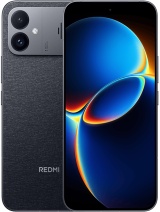 100
100Redmi K90 Max
2026 · MediaTek Dimensity 9500
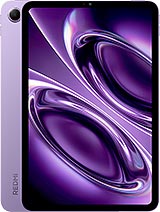 100
100Redmi K Pad 2
2026 · Mediatek Dimensity 9500
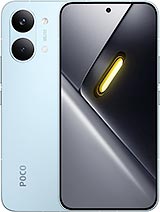 100
100Poco X8 Pro Max
2026 · Mediatek Dimensity 9500s
 100
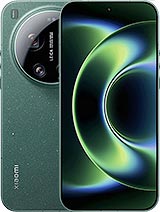
10017 Ultra
2026 · Qualcomm SM8850-AC Snapdragon 8 Elite Gen 5
 100
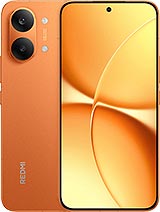
100Redmi Turbo 5 Max
2026 · Mediatek Dimensity 9500s
 100
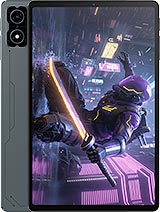
100Black Shark Gaming Tablet
2026 · Qualcomm SM8635 Snapdragon 8s Gen 3
Search another phone
Previous
Xiaomi Pad 6S Pro 12.4
Next
Xiaomi Pad 7 Pro